Last verified: October 1, 2026
Short answer: a whole house generator is worth it if you lose power for more than a day or two most years, if you rely on a well pump, sump pump or medical device, or if you work from home. It is usually not worth it if your outages are short and rare: a $10,000–$15,000 standby unit that runs a few hours a year is expensive insurance. The rest of this guide gives you the numbers to decide for your own house.
What a whole house generator really costs
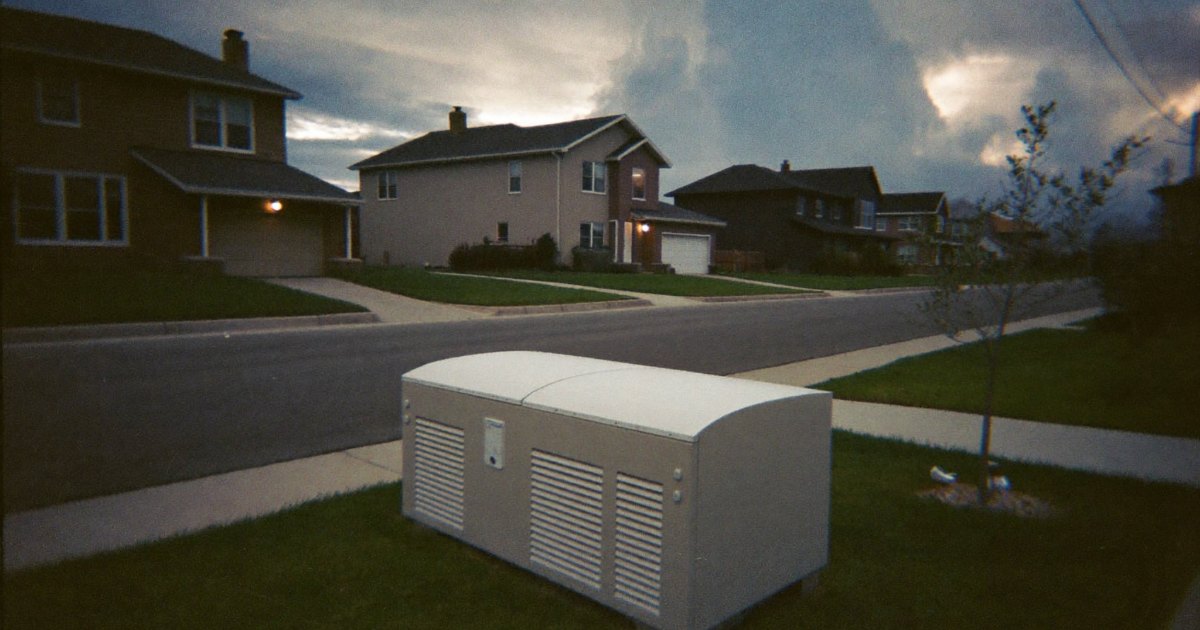
A home standby generator is a permanently installed unit that runs on natural gas or propane and starts on its own a few seconds after the power goes out. Its cost has three parts: the installation, the upkeep and the fuel.
1. Upfront cost (equipment and installation)
According to HomeGuide’s 2026 cost data, a whole house generator typically costs $6,000–$11,000 installed, and $9,500–$24,000 for units above 20 kW or with long gas and wiring runs. The spread comes from the size of the unit and how much work the installation needs:
| Cost item | Typical range | What drives it |
|---|---|---|
| Generator unit | $3,000–$6,000 (up to $12,000+ above 20 kW) | Size in kW, brand, Wi-Fi monitoring, load management |
| Automatic transfer switch | $600–$2,500 installed | Whole-home (200 A) vs essential circuits only |
| Installation labor | $3,000–$5,000 | Distance to the panel, panel upgrades, local rates |
| Concrete pad | $150–$400 | Many new units ship with a composite pad |
| Gas line / propane tank installation | $12–$25 per foot / $400–$1,800 | Meter capacity, trenching distance, tank size |
| Permits | $80–$450 | Your city or county |
All ranges are from HomeGuide’s 2026 cost breakdown. Always get at least three written quotes.
2. Maintenance
Standby generators exercise themselves every week and need an oil change, filters and a battery check at regular intervals set by the manufacturer. Dealers usually sell this as an annual service plan. Budget a few hundred dollars a year and ask local dealers for their exact price before you buy, because it is part of the real cost of ownership.
3. Fuel
Fuel is the cost most buyers forget. Here is what a popular size burns, using the manufacturer’s own figures for the Generac 22 kW and current U.S. average prices from the EIA (natural gas, propane):
| Fuel | Use at half load | Price used | Cost per hour | Cost per 24 hours |
|---|---|---|---|---|
| Natural gas | 221 cubic feet per hour | $15 per 1,000 cu ft | About $3.30 | About $80 |
| Propane | 2.53 gallons per hour | $2.67 per gallon | About $6.75 | About $162 |
Half load is a reasonable planning figure for a home that runs its fridge, lights, furnace or some air conditioning. Your real use depends on what you power, and gas prices vary a lot by state and season. A propane tank also has to be large enough: at 2.5 gallons per hour, a 250-gallon tank (usually filled to 80%) lasts roughly three days.
How often will you actually need it?
The value of a generator depends almost entirely on how long and how often your power goes out. In 2024, the average U.S. electricity customer went about 11 hours without power, nearly double the average of the previous decade, according to the U.S. Energy Information Administration. Major storms caused about 80% of those hours.
Averages hide big differences between states. In the same year, customers in South Carolina averaged nearly 53 hours without power, mostly because of Hurricane Helene, and North Carolina and Florida were also hit hard. Meanwhile, Arizona, the Dakotas and Massachusetts had under two hours. Before deciding, look at your own history: how many outages longer than 12 hours have you had in the last five years? Then compare your state in our power outages by state table.
What an outage costs you without a generator
A generator doesn’t pay for itself in cash the way solar panels might. It pays for itself by avoiding losses. Add up the ones that apply to you:
- Spoiled food. A fully stocked refrigerator stays cold for about 4 hours; a full freezer keeps its temperature for about 48 hours, a half-full one about 24 hours (USDA). A long outage can easily mean throwing out a few hundred dollars of food.
- Water damage. If your basement relies on a sump pump, a storm is exactly when the pump stops. A single flooded basement can cost far more than a generator.
- No water. Homes on a well have no running water when the pump has no power.
- Hotel nights and eating out. For a family, two or three nights away during a multi-day outage adds up quickly.
- Lost work. If you work from home, a day without power and internet can cost more than a day of generator fuel.
- Frozen pipes. In winter, a gas furnace can’t run without electricity for its blower and controls.
- Health and safety. Medical devices, heat during an ice storm and air conditioning during a heat wave matter most for older or vulnerable family members. This one doesn’t fit neatly into a spreadsheet, but for many households it is the real reason to buy.
Three worked examples
These examples use round numbers so you can see the logic. Replace them with your own.
| Home A: rare, short outages | Home B: one multi-day outage every few years | Home C: storm zone, well + sump pump | |
|---|---|---|---|
| Typical outages | 2–3 per year, under 4 hours | Short ones yearly, plus a 3-day outage every 3 years | 2–4 days after most hurricane seasons |
| Main losses avoided | Almost none | Food, 2 hotel nights, a few work days | Food, water supply, basement flooding risk, hotel nights |
| Rough losses avoided per year | Under $100 | A few hundred dollars | Often well over $1,000 |
| Standby generator | Hard to justify | Borderline; a portable generator or battery may be enough | Usually worth it |
The pattern is clear: the generator makes financial sense when outages are long, not just frequent, and when an outage threatens something expensive, such as a flooded basement, or something essential, such as water or medical power.
Cheaper alternatives to consider first
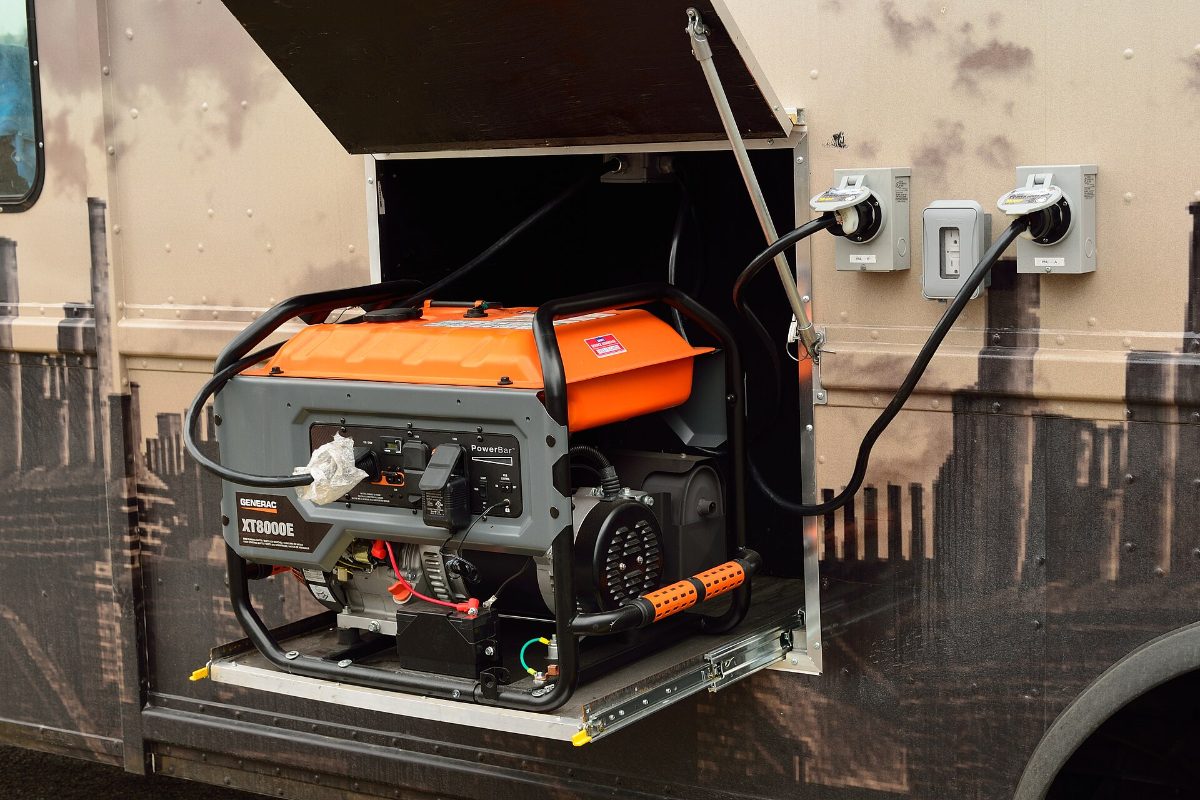
- Portable generator + interlock kit or transfer switch. Often a fraction of the cost of a standby unit, installed. You have to be home to start it, refuel it with gasoline and run it outdoors, far from windows. It can still power essentials such as the fridge, sump pump, furnace blower and lights.
- Battery backup. Quiet, no fuel and no carbon monoxide, and it can pair with solar panels. But it covers hours, not days, unless you install several batteries or have solar to recharge them.
- A smaller standby unit with load management. Many homes don’t need whole-home coverage. A 10–14 kW unit that powers essential circuits costs thousands less than a 22–26 kW unit.
Not sure what size you would need? Our generator size calculator gives a standby size and a minimum portable rating from the appliances you pick.
When a whole house generator is worth it: checklist
A standby generator is probably worth it if two or more of these are true:
- You have had at least one outage longer than 24 hours in the last three years.
- You live in a hurricane, ice-storm or wildfire shut-off area.
- Your home depends on a well pump or a sump pump.
- Someone in your home relies on powered medical equipment, or is vulnerable to heat or cold.
- You work from home and an outage costs you income.
- You already have natural gas at the house, or room for a large propane tank.
- You plan to stay in the home for at least 5–7 years.
If only one or none apply, start with a portable generator, a battery system, or simply a good outage plan.
Frequently asked questions
How long does a whole house generator last?
Manufacturers design air-cooled home standby generators for many years of service with regular maintenance. Warranty is a better guide to what the maker commits to: the Generac 22 kW, for example, comes with a 5-year limited warranty. Compare warranty length and what it covers (parts, labor, travel) when you get quotes.
Does a generator increase home value?
It can make a home more attractive to buyers in outage-prone areas, but don’t expect to recover the full cost at sale. Treat it as a quality-of-life purchase, not an investment.
Is natural gas or propane better?
Natural gas is cheaper to run and never needs refilling, but only if your home has a gas line with enough capacity. Propane works anywhere, stores for a long time, and gives slightly more output, but you need a tank and deliveries, and it costs more per hour.
Can I install a standby generator myself?
No. It involves your main electrical panel and a gas connection, requires permits in most places, and usually has to be installed by an authorized dealer to keep the warranty. Always use a licensed electrician.
The bottom line
A whole house generator is worth it when outages in your area are long, when an outage puts your water supply, basement or health at risk, and when you plan to stay in the house for years. For short, occasional outages, a portable generator with a proper transfer switch, or a battery system, gives you most of the benefit for much less money.