Last verified: October 1, 2026
To run a typical central air conditioner plus household essentials, most homes need a 14 kW generator for a 2–3 ton AC, 18 kW for a 4-ton AC and 22 kW for a 5-ton AC. Adding a soft starter to the AC can cut those sizes by one or two steps, because the problem is not the AC’s running power but its start-up surge.
Why air conditioners are hard on generators
An AC compressor draws a big surge for a fraction of a second when it starts, often two to three times its running power. That surge, not the running load, is what forces most homes into a bigger generator. The AC’s data plate lists two numbers worth knowing:
- RLA (rated load amps): current while running.
- LRA (locked rotor amps): current at start-up. Multiply by 240 for a rough idea of the start-up watts.
Give both numbers to your installer. They are far more reliable than any table, including ours.
Generator size by AC size
Each row assumes the AC plus essentials (refrigerator, sump pump, furnace blower, LED lights, TV and internet: 3,225 W running), calculated the same way as our generator size calculator: a standby size that covers 120% of the running load and the peak start-up load.
| Central AC | AC running / starting (typical) | Peak load with essentials | Standby size, no soft starter | Standby size, with soft starter |
|---|---|---|---|---|
| 2 ton | 2,500 / 7,000 W | 10,225 W | 14 kW | 10 kW |
| 3 ton | 3,500 / 9,500 W | 12,725 W | 14 kW | 10 kW |
| 4 ton | 4,700 / 12,000 W | 15,225 W | 18 kW | 14 kW |
| 5 ton | 5,800 / 15,000 W | 18,225 W | 22 kW | 14 kW |
The soft starter column assumes the surge above running power drops by 60%. Manufacturers claim more: Micro-Air says its EasyStart Flex reduces start-up current by up to 75% on residential units up to 6 tons (Micro-Air). Real results depend on the compressor.
On natural gas, size up
Air-cooled generators produce less on natural gas. Generac’s brochure lists its 22 kW model at 19.5 kW on natural gas and the 26 kW at 22.5 kW (Generac). A 5-ton AC without a soft starter, at 18.2 kW peak plus 20% headroom on the running load, still fits a 22 kW unit on natural gas, but with little margin for anything else starting at the same time.
Soft starter: the cheapest way to a smaller generator
A soft starter ramps the compressor up gradually instead of hitting it with full voltage. For about $400 for the device, plus installation by an HVAC technician or electrician, it can let a 14 kW generator do what would otherwise need 18–22 kW. That can save thousands on the generator, installation and fuel. Check two things first:
- That the soft starter is compatible with your compressor type and doesn’t affect your AC warranty.
- That your generator installer agrees with the reduced size and documents it in the load calculation.
Heat pumps and electric backup heat
A heat pump has a compressor just like an AC, so the table above applies in both heating and cooling. The catch is electric backup heat strips, which can draw 5–20 kW on their own in cold weather. Many installations lock them out while on generator power, or use load management so they only run when nothing else large is on.
Portable generators and central air
Even a large 9,000–10,000 W portable struggles to start a 3-ton AC while also running essentials. With a soft starter, a 2-ton system is sometimes possible. For homes that need central air in an outage, a standby unit is the realistic choice. See Standby vs Portable.
Reading your AC’s data plate
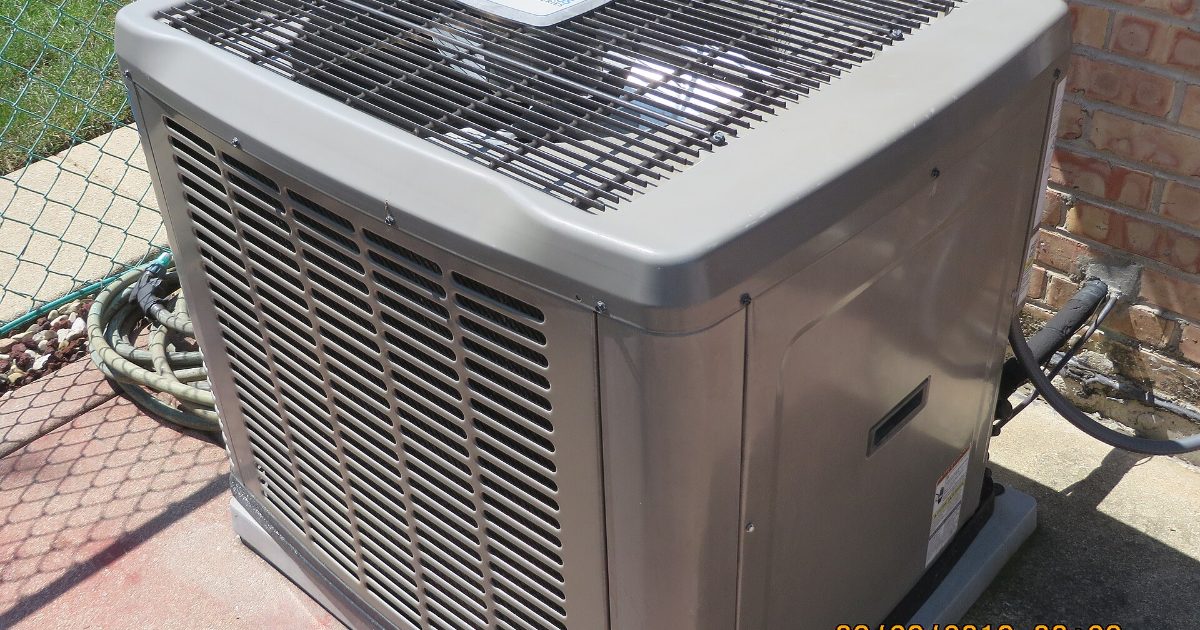
The outdoor condenser has a metal or sticker data plate, usually on the side. The numbers that matter for generator sizing are:
| Label | Meaning | How to use it |
|---|---|---|
| RLA (or RLA/ RLA for compressor) | Rated load amps: running current of the compressor | Multiply by 240 for approximate running watts of the compressor |
| LRA | Locked rotor amps: current at start-up | Multiply by 240 for the approximate start-up surge |
| FLA (fan motor) | Full load amps of the condenser fan | Add to the running load |
| MCA / MOCP | Minimum circuit ampacity / maximum breaker size | For the electrician; not used directly for generator sizing |
For example, an LRA of 50 suggests a start-up draw of roughly 12,000 W (50 × 240) for an instant. That is why a soft starter, which limits the inrush, can make such a difference.
Running the AC on generator: practical tips
- Set the thermostat a few degrees higher than usual; the compressor cycles less often.
- Avoid starting other big motors (well pump, dryer) at the same moment the AC starts.
- If you have two AC systems, run only one at a time, or let load management handle it.
- Keep the outdoor coil clean; a dirty coil makes the compressor work harder.
Example: the same house with three options
| Option | Generator size needed (4-ton AC + essentials) | Comfort |
|---|---|---|
| No soft starter, no load management | 18 kW | AC runs normally |
| Soft starter | 14 kW | AC runs normally |
| Skip AC on generator | 10 kW | No cooling during outages |
Sizes from the table above, using the same calculation as our calculator. The price difference between those sizes is often several thousand dollars, which is why the soft starter question deserves a place in every quote.
Next steps
- Read the RLA and LRA from your outdoor unit’s data plate.
- Run your appliances through the calculator, choosing your AC tonnage and soft starter option.
- Ask installers to quote both options: with and without a soft starter.