
Last verified: October 1, 2026
To keep a refrigerator, a sump pump and a 1 HP well pump running, you need a generator with at least about 4,200 running watts and 5,800 starting watts. With a smaller 1/2 HP well pump, about 3,100 running and 4,300 starting watts is enough. In practice, most people choose a 5,000–7,500 W portable or a 10 kW standby unit so the furnace, lights and internet can run too.
The minimum, appliance by appliance
| Appliance | Running watts | Starting watts | Notes |
|---|---|---|---|
| Refrigerator | 700 | 2,200 | Cycles on and off all day |
| Sump pump, 1/2 HP | 1,050 | 2,150 | Runs most when it rains, exactly when outages happen |
| Well pump, 1/2 HP | 1,000 | 2,100 | Often 240 V |
| Well pump, 1 HP | 2,000 | 4,000 | Common for deeper wells; usually 240 V |
Typical planning values. Your pump’s nameplate shows its horsepower, voltage and amps; check it before buying.
The math
Fridge + sump pump + 1 HP well pump
- Running: 700 + 1,050 + 2,000 = 3,750 W
- Largest start-up surge: the well pump, 4,000 − 2,000 = 2,000 W
- Peak: 3,750 + 2,000 = 5,750 W
- With 10% running headroom: about 4,200 W running, 5,800 W starting
Fridge + sump pump + 1/2 HP well pump
- Running: 700 + 1,050 + 1,000 = 2,750 W
- Largest surge: the fridge, 1,500 W
- Peak: 4,250 W → about 3,100 W running, 4,300 W starting
We only add the single largest surge because pumps and compressors rarely start at the same instant. If you want to be safe even when they do, add up all the surges, or choose the next size up.
Add what else you’ll want
An outage with only the fridge and pumps is uncomfortable. The most common additions:
- Gas furnace blower (about 875 W running, 2,350 W starting): essential in winter.
- Lights, TV, internet, phone charging (about 600 W).
- Microwave (about 1,000 W).
With all of these plus a 1 HP well pump, the running load is about 6,225 W and the peak about 8,225 W: a large portable (around 7,000 W running) or a 10 kW standby generator. Try your own combination in the generator size calculator.
The 240-volt catch with well pumps
Many well pumps run on 240 volts. A portable generator powers them only through a 240 V outlet (usually a 30 A or 50 A twist-lock) connected to your panel with an interlock kit or transfer switch. Ordinary 120 V household outlets on a generator cannot run a 240 V pump. Check your generator’s outlets and have a licensed electrician do the connection.
Why the sump pump matters most
Storms bring outages and rain together. If your basement depends on a sump pump, the hours after the power goes out are when it is needed most. Options if a generator is not possible:
- A battery backup sump pump, which takes over automatically for a limited number of hours.
- A water-powered backup pump, where municipal water pressure is available and allowed.
Neither replaces a generator in a multi-day outage, but both protect against the most common short ones.
How a well system uses power
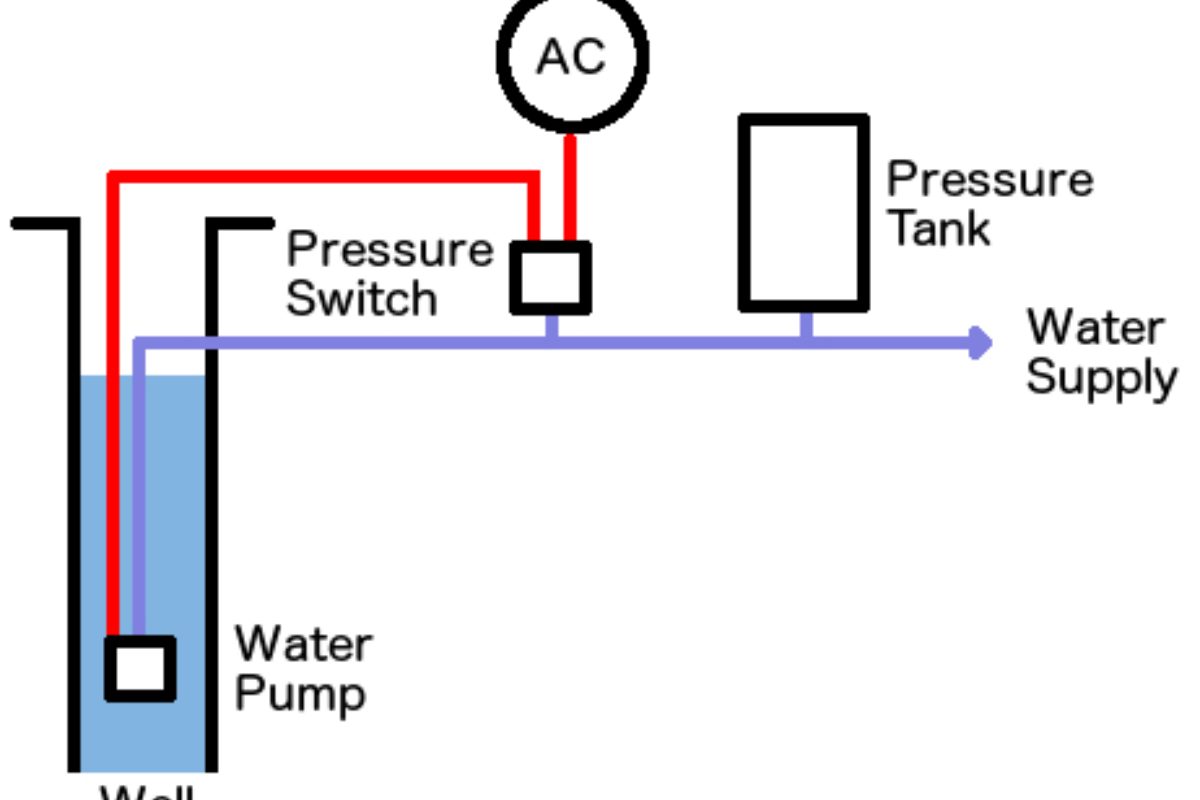
A well pump doesn’t run continuously. A pressure switch turns it on when the pressure tank drops to a set level and off when it’s refilled. During an outage, that means the pump starts every time someone runs a tap, flushes a toilet or showers, and each start brings a surge. That’s why the well pump, not its running watts, often decides the generator size for rural homes.
Two things are worth checking on your system before you buy a generator:
- Pump horsepower and voltage: on the pump’s control box or the original installation paperwork. Deeper wells often use 1 HP or larger pumps at 240 V.
- Whether the pump has a separate control box (common for 3-wire submersible pumps). It needs power too and is usually on the same circuit.
Sump pumps: plan for the worst hour
A sump pump’s job is heaviest during and after heavy rain, which is exactly when power lines come down. If a basement floods once, the cleanup can cost far more than a generator setup. A few practical points:
- Know where your sump pump circuit is in the panel, so it’s one of the first you power with an interlock kit.
- Test the pump before storm season by pouring water into the pit until it starts.
- Consider a battery backup sump pump as a second layer; it takes over automatically if the main pump or its power fails.
Example: a rural home with a 1 HP well
| Load | Running W | Starting W |
|---|---|---|
| Refrigerator | 700 | 2,200 |
| Sump pump (1/2 HP) | 1,050 | 2,150 |
| Well pump (1 HP) | 2,000 | 4,000 |
| Gas furnace blower | 875 | 2,350 |
| Lights, TV, internet | 600 | 600 |
| Total | 5,225 | Peak with well pump starting: 7,225 |
Recommended: a portable with at least about 5,800 running watts and 7,300 starting watts and a 240 V outlet, or a 10 kW standby unit (which needs 1.2 × 5,225 = 6.3 kW for running and 7.2 kW for the peak). Run your own combination in the calculator.
Frequently asked questions
Can I run the well pump only when I need water?
Yes. With an interlock kit, some owners keep the well pump breaker off and turn it on a few times a day to refill the pressure tank. It saves fuel but takes discipline, and someone has to remember.
Why does the pump trip the generator?
Usually because the start-up surge exceeds the generator’s surge rating while other motors are running. Turn other large loads off before the pump starts, or choose a bigger generator.
Portable or standby?
If outages often last more than a day, or nobody may be home to start a generator when the basement starts filling, a standby unit is worth pricing. See Standby vs Portable Generator and Whole House Generator Cost.