Last verified: October 1, 2026
An air-cooled home standby generator burns roughly 100–230 cubic feet of natural gas per hour at half load and 130–335 cubic feet per hour at full load, depending on its size. At about $15 per 1,000 cubic feet, that is roughly $35–$85 a day at half load for the sizes most homes buy. The bigger practical question is often not the cost but whether your gas meter and piping can supply the generator and your other gas appliances at the same time.
Natural gas use by generator size
| Generator (Generac Guardian) | Cu ft/hour at ½ load | Cu ft/hour at full load | Cost per day, ½ load | Cost per day, full load |
|---|---|---|---|---|
| 10 kW | 101 | 127 | About $36 | About $46 |
| 14 kW | 195 | 256 | About $70 | About $92 |
| 18 kW | 169 | 247 | About $61 | About $89 |
| 22 kW | 228 | 327 | About $82 | About $118 |
| 24 kW | 203 | 306 | About $73 | About $110 |
| 26 kW | 188 | 333 | About $68 | About $120 |
Consumption figures from the Generac Guardian Series brochure; the 22 kW figures are for the 7042-2 version (other versions list 203 and 306 cu ft/h). Cost per day calculated at $15 per 1,000 cubic feet, which is in the range of recent U.S. average residential prices. Your utility’s rate may be quite different, so plug in your own.
How to calculate your own cost
You need three numbers: the generator’s consumption at the load you expect, the hours it will run, and your gas price.
- Find your gas price on your utility bill. It may be quoted per therm or per hundred cubic feet (Ccf). One Ccf is 100 cubic feet; one therm is 100,000 Btu, and the EIA gives natural gas at about 1,036 Btu per cubic foot, so a therm is about 97 cubic feet.
- Pick a load. Half load is a good planning figure for a home running its fridge, furnace or some AC. Use full load if you’ll run central air hard in a heat wave.
- Multiply: cubic feet per hour × hours × price per cubic foot.
Example: a 22 kW unit at half load (228 cu ft/h) for a 3-day outage, with gas at $1.50 per therm. 228 × 72 = 16,416 cu ft. That’s about 169 therms (16,416 ÷ 97), or roughly $254.
Why bigger isn’t always thirstier
In the table, the 18 kW and 26 kW units burn less gas at half load than the 14 kW unit. Engine size, design and how “half load” is defined for each model all play a part. Two lessons: compare spec sheets rather than assuming consumption scales with kW, and remember that what really drives your fuel use is the load your home puts on the generator, not its nameplate size.
Can your gas meter supply it?
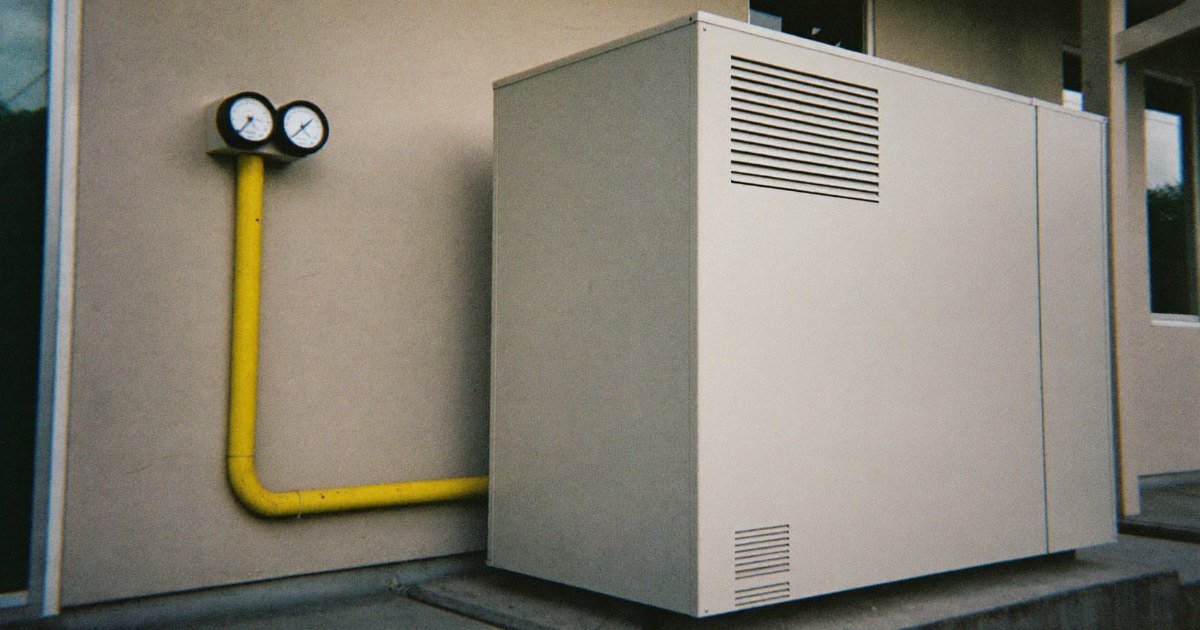
This is the question that delays the most installations. A large air-cooled generator at full load can need well over 300 cubic feet per hour. A gas furnace, water heater and range may be running at the same time. The utility meter, the service line and the house piping all have to deliver that combined flow at the right pressure.
- 22 kW generator, full load: 327 cu ft/h (manufacturer data)
- Gas furnace (example: 100,000 Btu/h input): About 97 cu ft/h
- Tank water heater (example: 40,000 Btu/h): About 39 cu ft/h
- Total in this example: About 463 cu ft/h
Furnace and water heater figures are illustrative; your appliances’ Btu ratings are on their nameplates (divide Btu/h by about 1,036 to get cubic feet per hour). Your installer should:
- Add up the gas demand of every appliance plus the generator at full load.
- Check the meter’s rated capacity and the pipe size and length from the meter to the generator.
- Request a meter upgrade from the utility if needed, well before the installation date.
An undersized supply can make the generator struggle to start large loads or shut down under heavy load. See Hidden Generator Installation Costs.
What a long outage costs on natural gas
At half load, a 22 kW unit burns about 5,500 cubic feet in a day, roughly $82 at $15 per 1,000 cubic feet. A 3-day outage comes to about 16,400 cubic feet, or $246, and a full week to about 38,300 cubic feet, or $575.
The same 7 days on propane would cost far more at current prices; compare both in Natural Gas vs Propane Generator.
Winter is the hard case
Most of the fuel figures on this page describe the generator on its own. In a winter storm, it’s never on its own. The furnace, the water heater and maybe a gas range are all drawing from the same meter at the same time, and the generator is often working hard too, because the furnace blower, lights and electronics all run on its power. That’s the situation in which an undersized meter or a long, narrow supply pipe shows up: the generator can struggle under load, or other appliances can misbehave when everything calls for gas at once.
You can’t test this on a mild afternoon, which is why the meter and pipe check belongs in the quote and not after installation. If your installer confirms the supply with every gas appliance running at its full rating plus the generator at full load, a cold night won’t catch you out. If they only checked the generator’s half-load figure, ask them to redo the calculation.
The same logic applies to your gas bill. A winter outage pushes up your gas use from two directions: the generator, and the furnace running as normal. A multi-day ice storm can produce a noticeably higher bill than the generator figures alone suggest, so it’s worth budgeting for both.
Ways to burn less gas during an outage
- Raise the thermostat a few degrees in summer; the AC compressor is the biggest continuous load.
- Avoid running the dryer, oven and water heater at the same time.
- Use load management to shed big loads automatically. See Generator Load Management.
- Turn off lights and electronics in unused rooms; small loads add up over days.
Frequently asked questions
Will my gas bill show the generator’s use?
Yes. The generator draws through your meter, so outage use and the small amount used in weekly tests appear on your regular bill.
Does the generator produce less power on natural gas?
Yes, air-cooled units are rated lower on natural gas than on propane. Generac’s brochure lists its 22 kW model at 19.5 kW on natural gas (newer versions list higher). Size for your fuel. See 14 kW vs 22 kW vs 26 kW.
What if the gas supply is interrupted?
Natural gas service is rarely interrupted by storms because the lines are underground, but it can be shut off after earthquakes or severe flooding. In those cases the generator will stop too.
The takeaway
Plan on about $35–$85 a day at half load for typical home sizes at current prices, make sure your meter can handle the extra demand, and use load management and sensible habits to stretch your fuel during long outages.