Last verified: October 1, 2026
Short answer: load management lets a smaller standby generator run a whole house by temporarily switching off big appliances when the generator is near its limit, then switching them back on when there is spare capacity. It often lets you buy one size smaller, which can save thousands of dollars in equipment, installation and fuel. The trade-off is that the air conditioner, electric range or water heater may pause for a few minutes during an outage.
How load management works
- The transfer switch, or a separate module, measures how much power the house is drawing from the generator.
- When the load approaches the generator’s capacity, it switches off the lowest-priority circuits first, such as a second AC or an electric water heater.
- When demand drops, it switches them back on one at a time, so the start-up surges of big motors don’t pile up.
- Essential circuits (fridge, furnace, sump or well pump, lights) are set to never be shed.
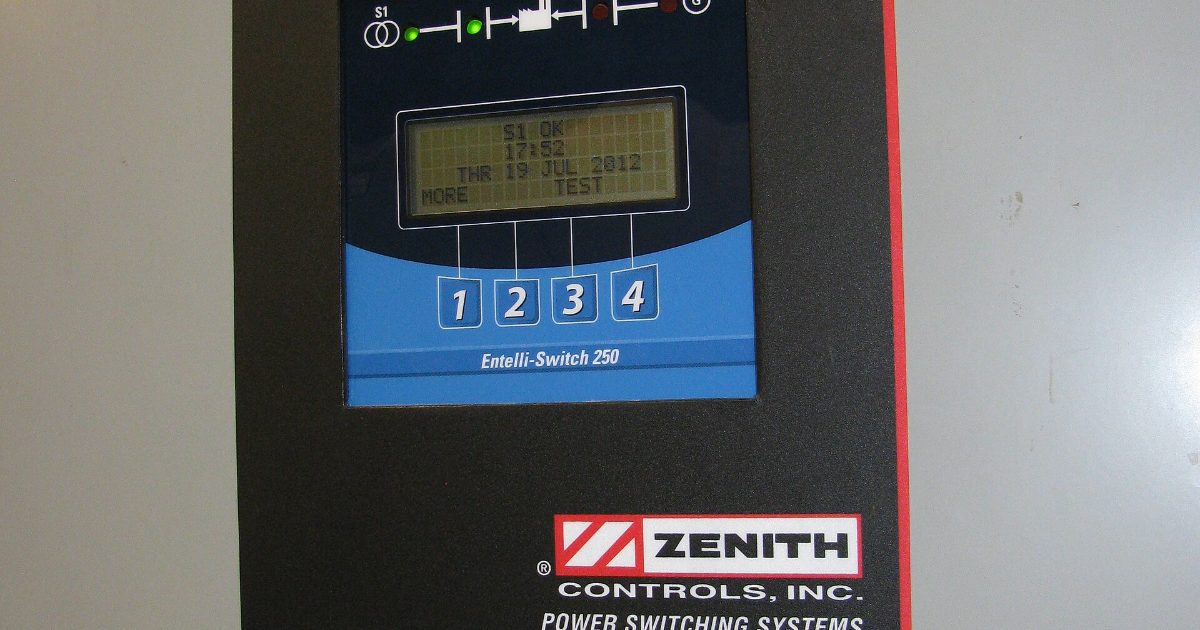
Champion, for example, describes its 200 A aXis transfer switch as able to manage high-demand appliances, and many other manufacturers offer similar “smart” switches or add-on modules.
Which loads are usually managed
| Load | Typical approach | Priority |
|---|---|---|
| Central AC or heat pump | Interrupt the thermostat call or open a contactor | Shed first, back on when capacity allows |
| Electric heat strips | Locked out on generator power, or shed | Lowest |
| Electric water heater | Contactor on the circuit | Low |
| Electric range, dryer | Contactor on the circuit | Low to medium |
| EV charger | Shed or disabled during generator operation | Lowest |
| Fridge, freezer, sump/well pump, furnace, lights, internet | Never shed | Essential |
Why it saves money
Generators are sized for the worst moment: everything running and the biggest motor starting. In a real outage, those moments are rare. Load management simply prevents the rare overload so the generator can be sized for normal use. Compare the costs:
- Load managers: HomeGuide lists smart load managers at about $130–$250 each before installation (HomeGuide).
- Generator size steps: HomeGuide’s unit prices run from $3,000–$4,500 for 13–16 kW to $4,000–$6,000 for 17–20 kW and $4,500–$12,000 for 22–25 kW, before installation. Larger units also burn more fuel at full load.
Two or three load modules usually cost far less than the jump to the next generator size.
Worked example
A house has essentials (3,225 W running), a 4-ton central AC (about 4,700 W running, 12,000 W at start-up), an electric water heater (4,500 W) and an electric range (5,000 W).
| Scenario | Running load | Peak with AC starting | Standby size needed |
|---|---|---|---|
| Everything at once, no management | 17,425 W | 24,725 W | 26 kW |
| Water heater and range shed while the AC runs | 7,925 W | 15,225 W | 18 kW |
| Same, plus a soft starter on the AC | 7,925 W | about 10,845 W | 14 kW |
Calculated with the same method as our generator size calculator: the standby size must cover 120% of the running load and the peak start-up load. The soft starter row assumes a 60% cut in the AC’s surge above its running power. The example uses typical wattages; your appliances will differ.
What it feels like during an outage
With load management, you might notice the AC pause for a few minutes while the range is on, or the water heater wait until the AC cycles off. Most families barely notice. The generator never overloads, so you avoid the shutdowns and “Overload” alarms that unmanaged systems can trigger when too many big appliances run together.
Load management vs soft starter vs bigger generator
| Load management | Soft starter | Bigger generator | |
|---|---|---|---|
| What it solves | Too many big loads at once | The AC’s start-up surge | Both, by brute force |
| Comfort during outages | Occasional short pauses | No change | Everything runs normally |
| Typical cost | Hundreds of dollars | A few hundred dollars (Micro-Air lists its EasyStart Flex at $389) | Thousands of dollars more |
| Fuel use | Lower | Unchanged | Higher at full load |
Many installers combine the first two to get the most from a mid-size generator. See What Size Generator to Run Central Air.
Questions to ask your installer
- Does the transfer switch you’re quoting include load management, and how many circuits can it control?
- Which of my appliances will be managed, and in what order?
- How does the system handle the AC: thermostat interruption or a contactor?
- Can I change priorities later?
- What size generator would I need with and without load management?
How it is set up during installation
Load management is configured when the transfer switch is installed. The electrician wires each managed appliance through a relay or contactor controlled by the switch, or connects the switch to the AC thermostat wiring. Each managed load gets a priority number. When the generator approaches its limit, the lowest priority is shed first; when there is room again, loads come back in order of priority, with a delay between them so two compressors never start at the same moment.
Take a few minutes during the walkthrough to agree on priorities with the installer. A family that works from home in summer may want the AC restored before the dryer; a family with electric heat may rank things differently in winter. Write the priority list down and keep it with the generator’s manual so you know what to expect when the power goes out.
Frequently asked questions
Will load management damage my AC?
Properly installed systems are designed to stop and restart the AC safely, typically with a delay so the compressor isn’t restarted too quickly. Ask your installer how the delay is handled.
Does it work with portable generators?
Load management is mainly a feature of automatic transfer switches for standby generators. With a portable and an interlock kit, you manage loads yourself by turning breakers on and off. See Interlock Kit vs Transfer Switch.
Can I add it later?
Often yes, with add-on modules, but it is cheaper and simpler to plan it from the start.
Bottom line
If your load calculation puts you on the border between two generator sizes, load management is usually the cheapest way to stay in the smaller one. Ask for quotes with and without it, and compare the price difference with the extra comfort a bigger generator would give you.