Oxygen Concentrator in a Power Outage: Your Backup Plan
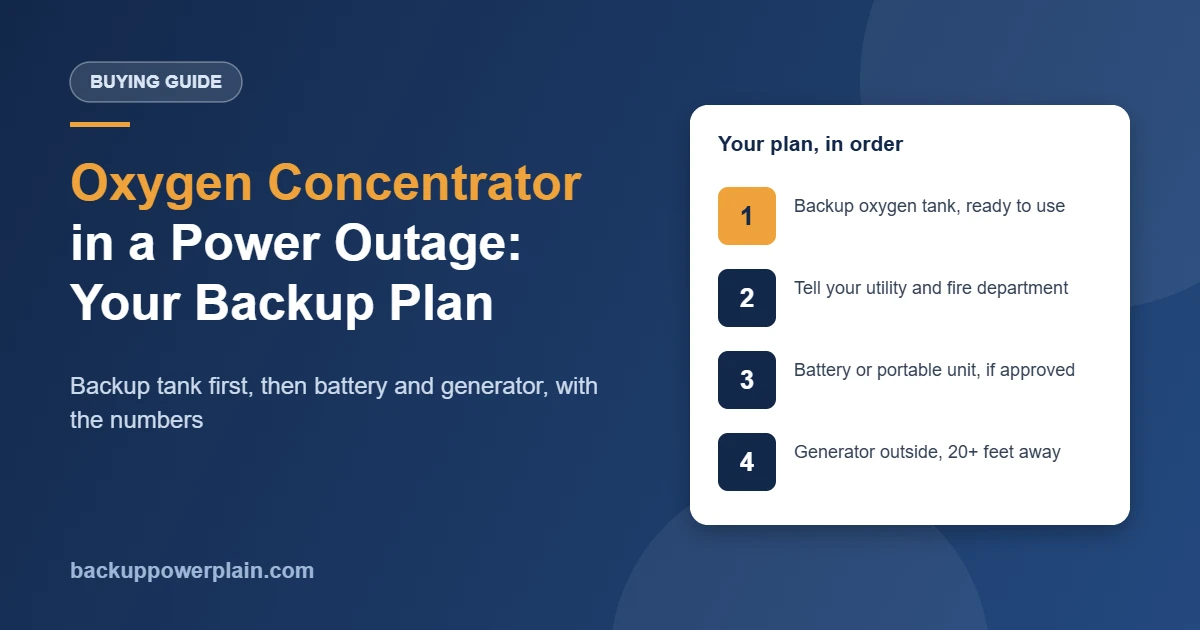
What to do about a home oxygen concentrator in an outage: backup tank first, who to call, how long a battery lasts and how to use a generator safely.
Should you buy a home backup generator at all, and which kind? These guides compare standby, portable and battery backup, natural gas versus propane, and inverter versus conventional generators, using real costs and outage data rather than sales claims. Start here if you just sat through a long outage and want to know whether a generator is worth it for your house.
What to do about a home oxygen concentrator in an outage: backup tank first, who to call, how long a battery lasts and how to use a generator safely.
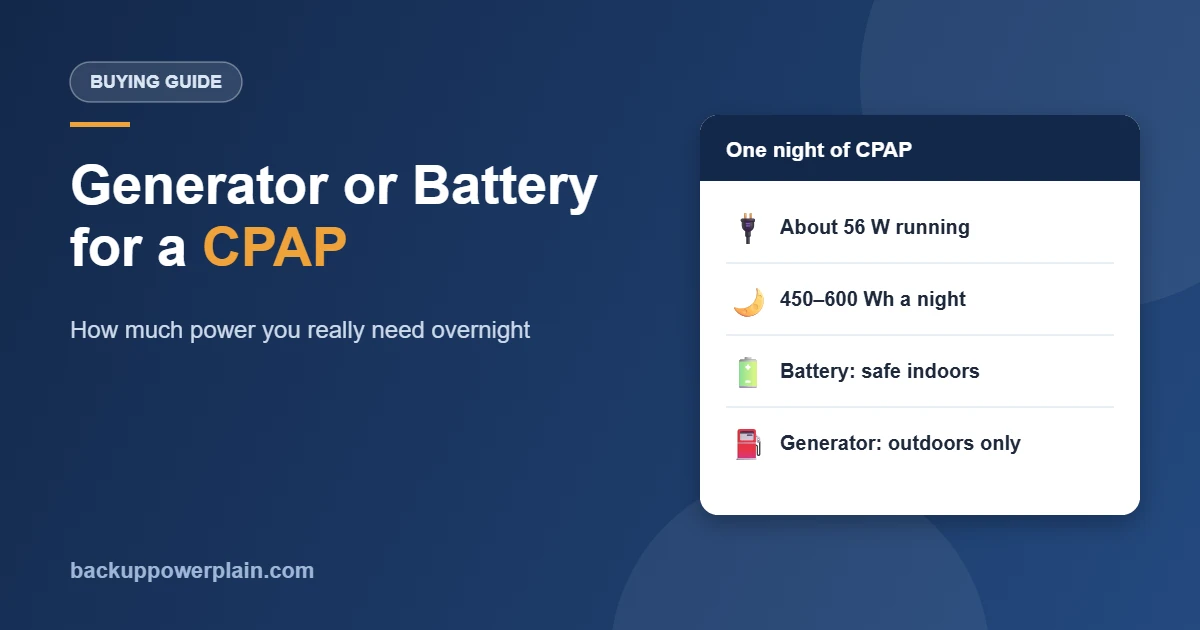
A CPAP uses about 56 W, so a full night is roughly 450 to 600 Wh. How to choose between a battery, a power station and a generator, with a runtime calculator.
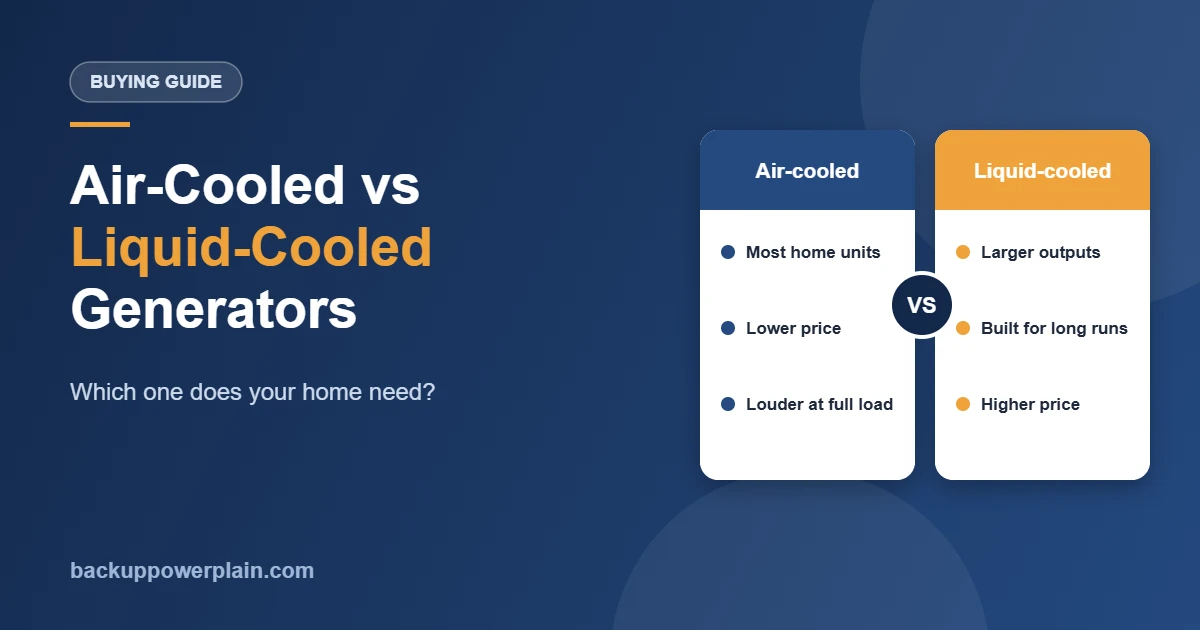
Home standby generators up to about 26 kW are air-cooled; larger units are liquid-cooled. Differences in size, noise, maintenance and price, and when a home needs liquid-cooled.
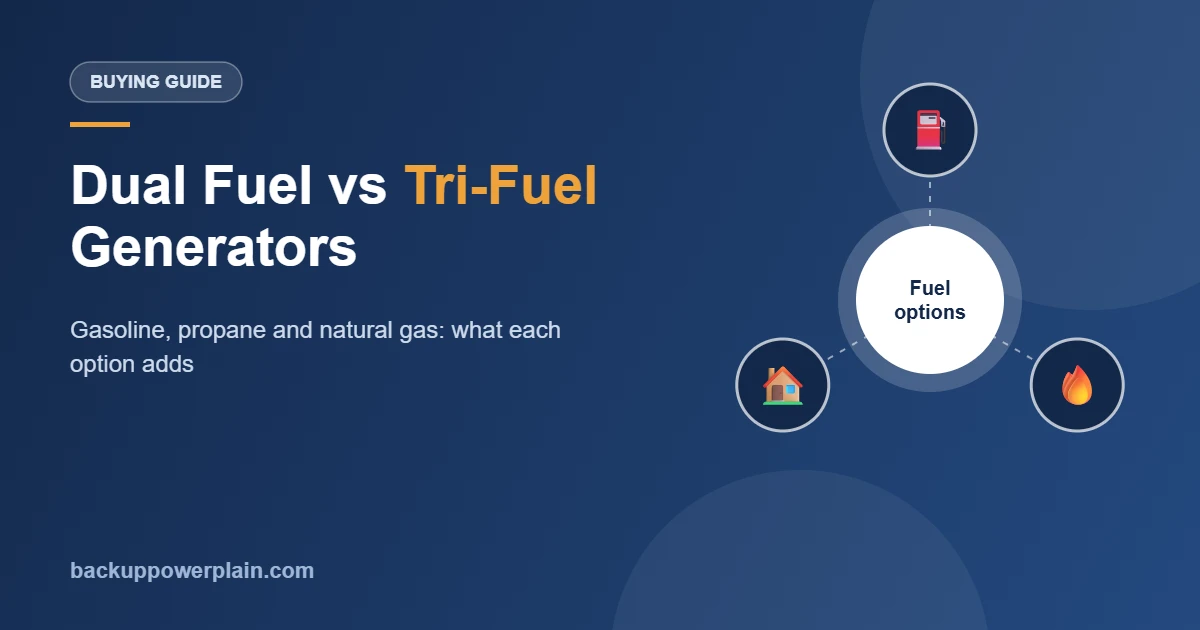
Dual fuel generators run on gasoline or propane; tri-fuel adds natural gas. Why dual fuel suits most homes, how long propane cylinders last and when tri-fuel makes sense.
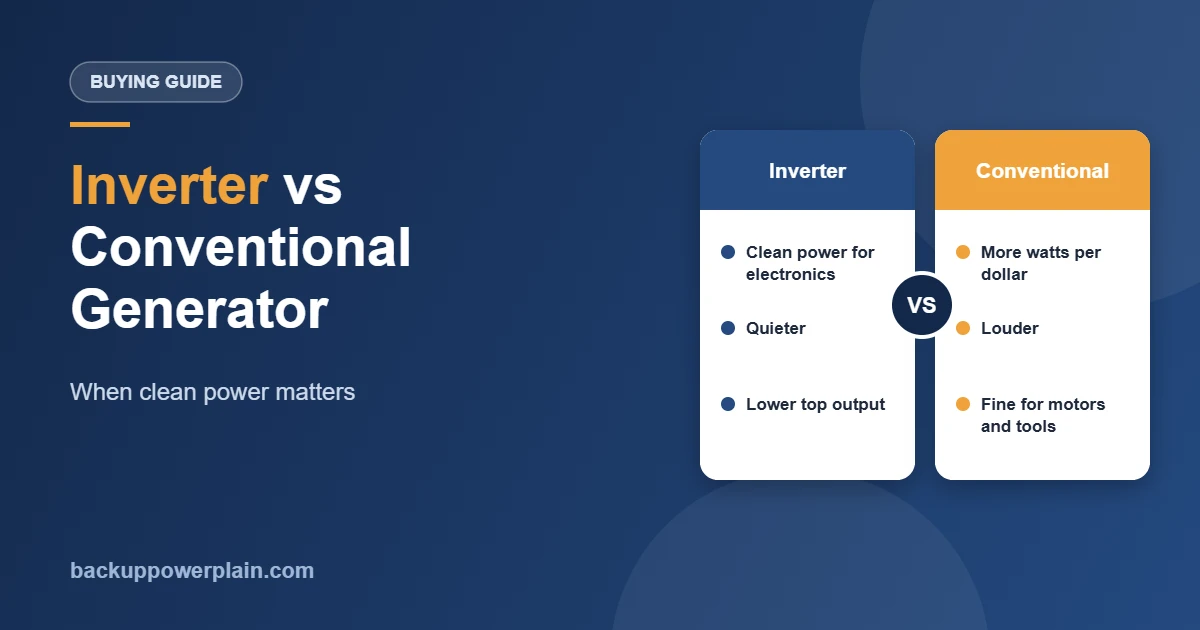
Inverter generators are quieter, cleaner and thriftier at light loads; conventional generators give more watts per dollar. Which one fits home backup.
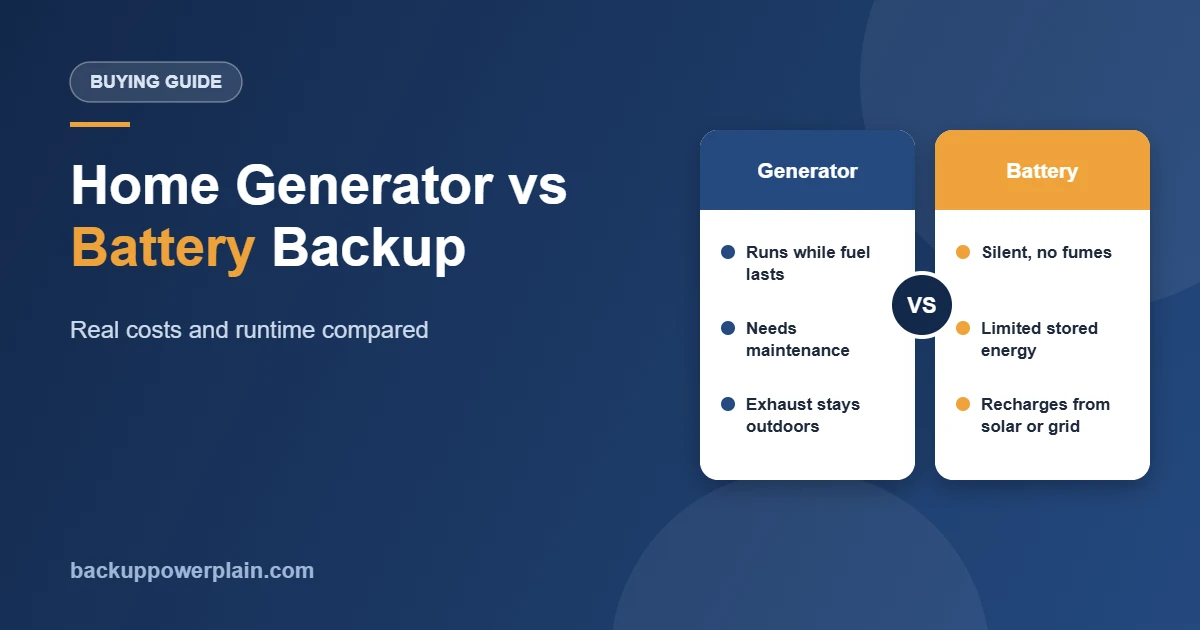
A 13.5 kWh home battery costs about $15,600 installed and covers hours of essentials; a standby generator runs for days. Runtime tables and when each one makes sense.
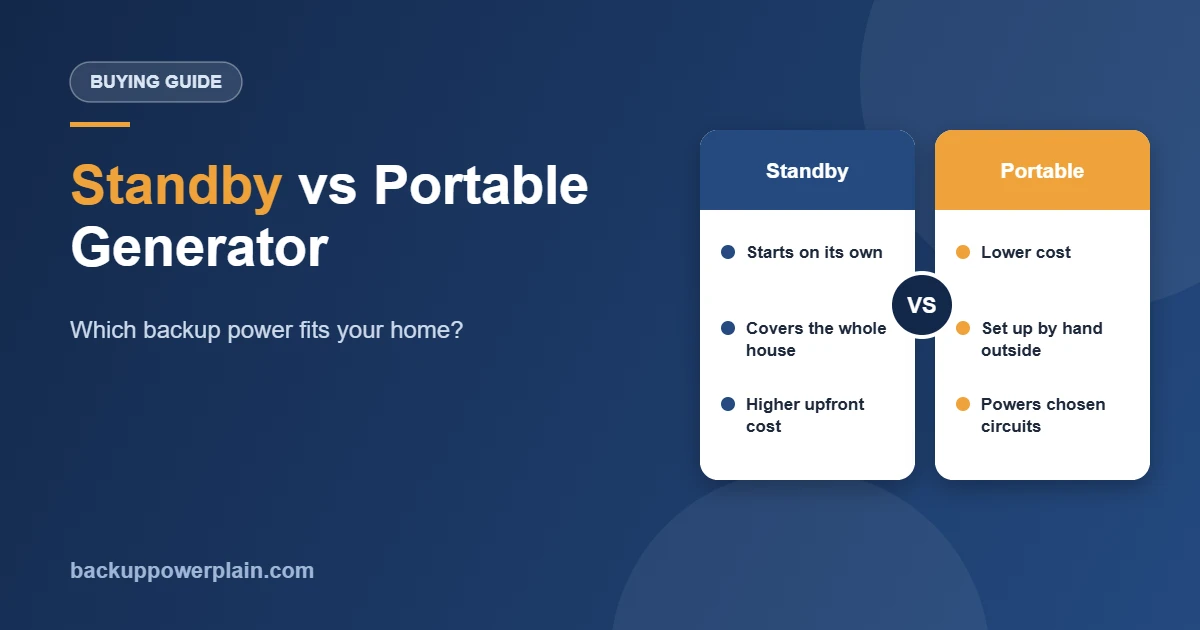
Standby generators start themselves and run for days; portables cost a fraction of the price but need you to fuel and connect them. Costs, safety and a 5-year comparison.
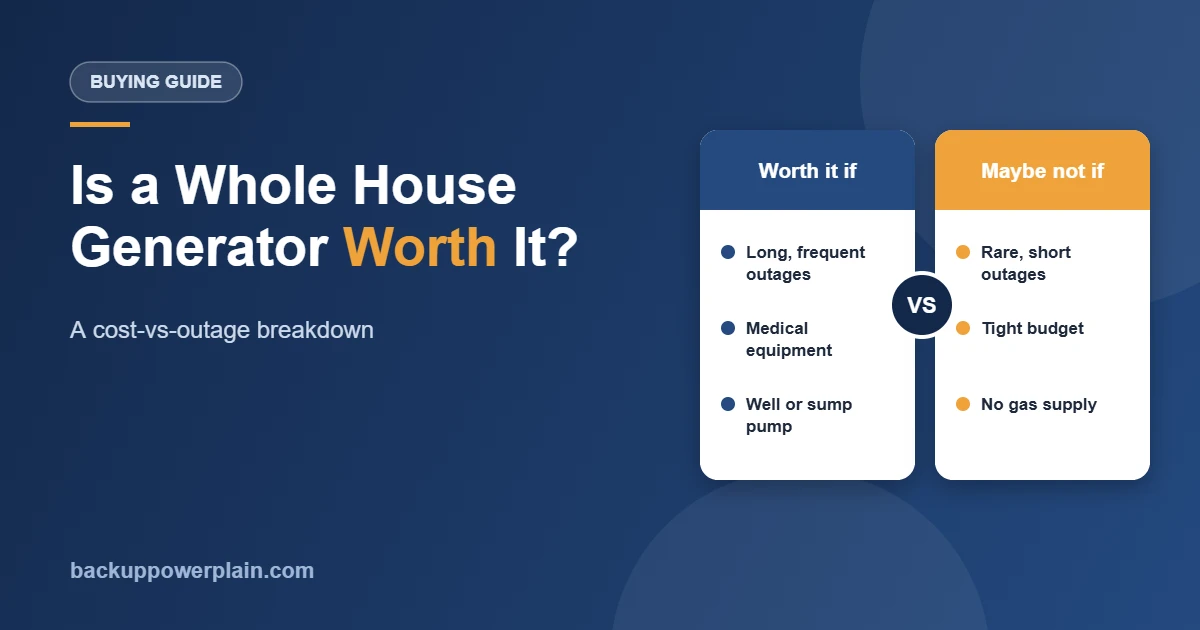
A whole house generator is worth it when outages are long, when you rely on a well or sump pump, or when you work from home. Real installed costs, fuel per day and three worked examples.
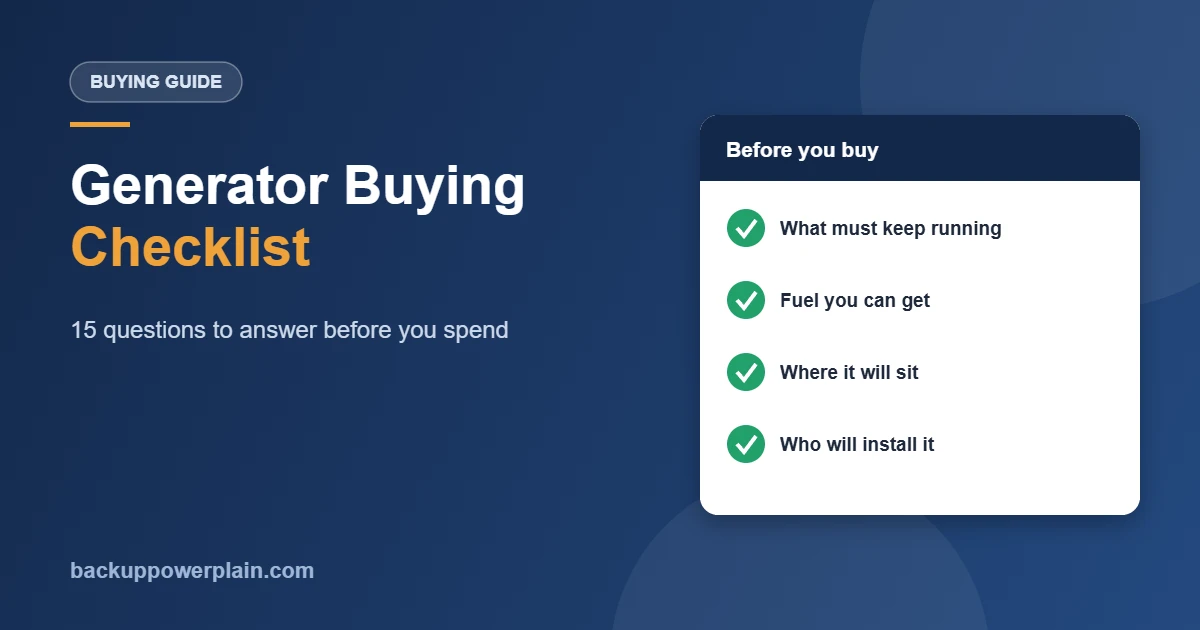
Fifteen questions to answer before buying a home generator: outages, sizing, fuel, gas meter, permits, warranty and maintenance, plus red flags to watch for in quotes.
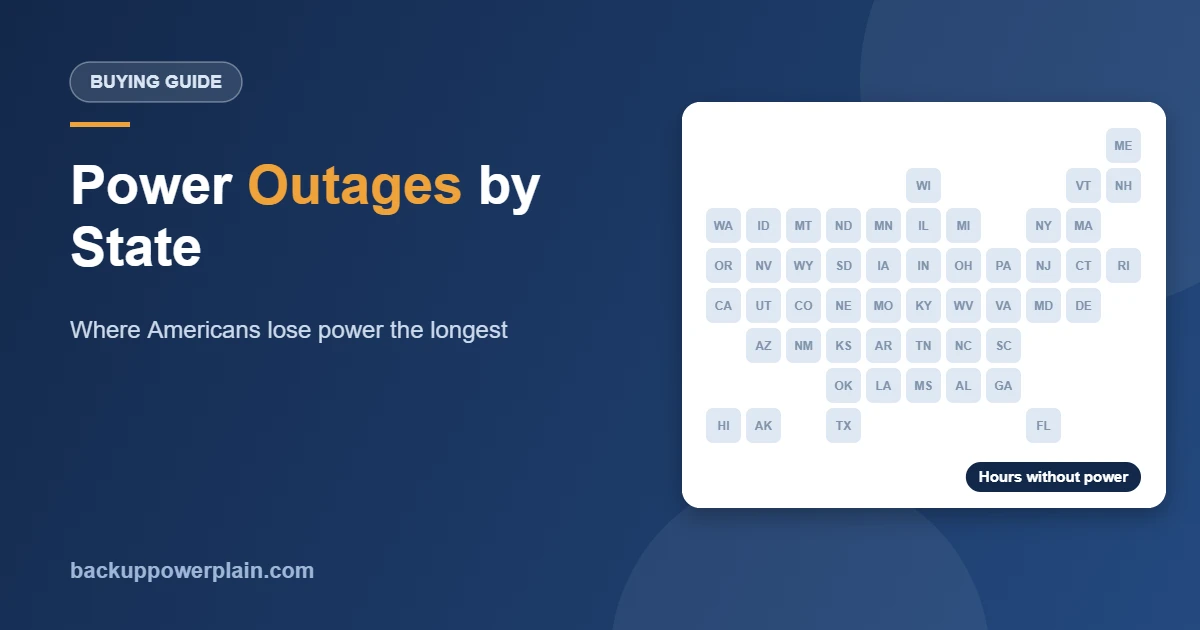
Hours without power in every U.S. state for 2023 and 2024, from official EIA data. Maine and South Carolina top the list; Arizona and South Dakota lose the least.